
 Image 1 of 5
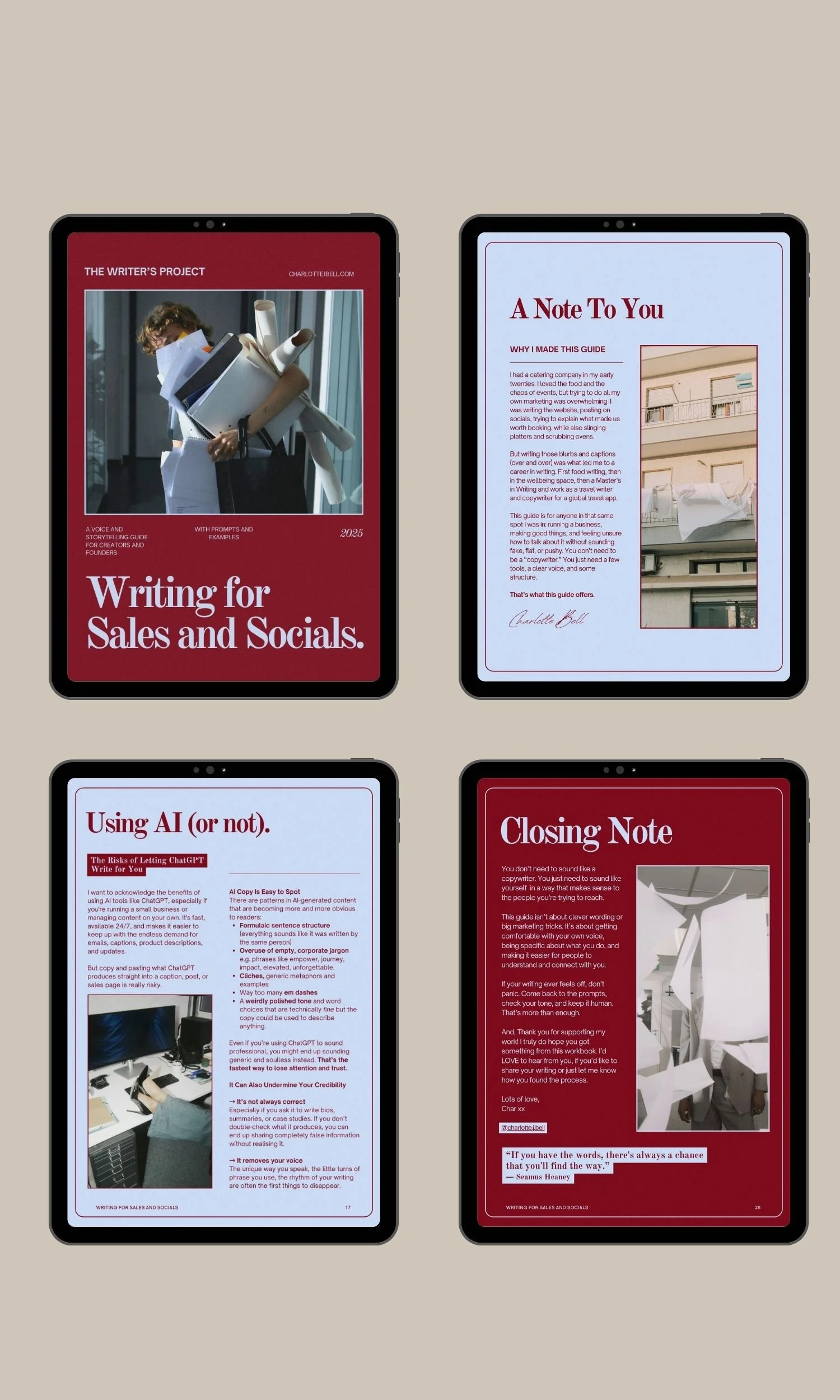 Image 2 of 5
 Image 3 of 5
 Image 4 of 5
 Image 5 of 5


Why I made this Guide
The problem most small business owners have isn't that they can't write. It’s that the moment they sit down to write for their business, something seizes up. They start trying to sound polished or perky or persuasive, and the writing comes out flat, performative, or like every other business in their feed.
I've spent more than a decade writing copy for businesses, brands, and publications, and ran my own first business in my twenties. I made Writing for Sales and Socials because almost every existing copywriting guide is written by marketers, for marketers, in language that makes ordinary people feel they're doing it wrong. I wanted to share what I’ve learned throughout my career to help you feel confident in your voice.
What’s Inside
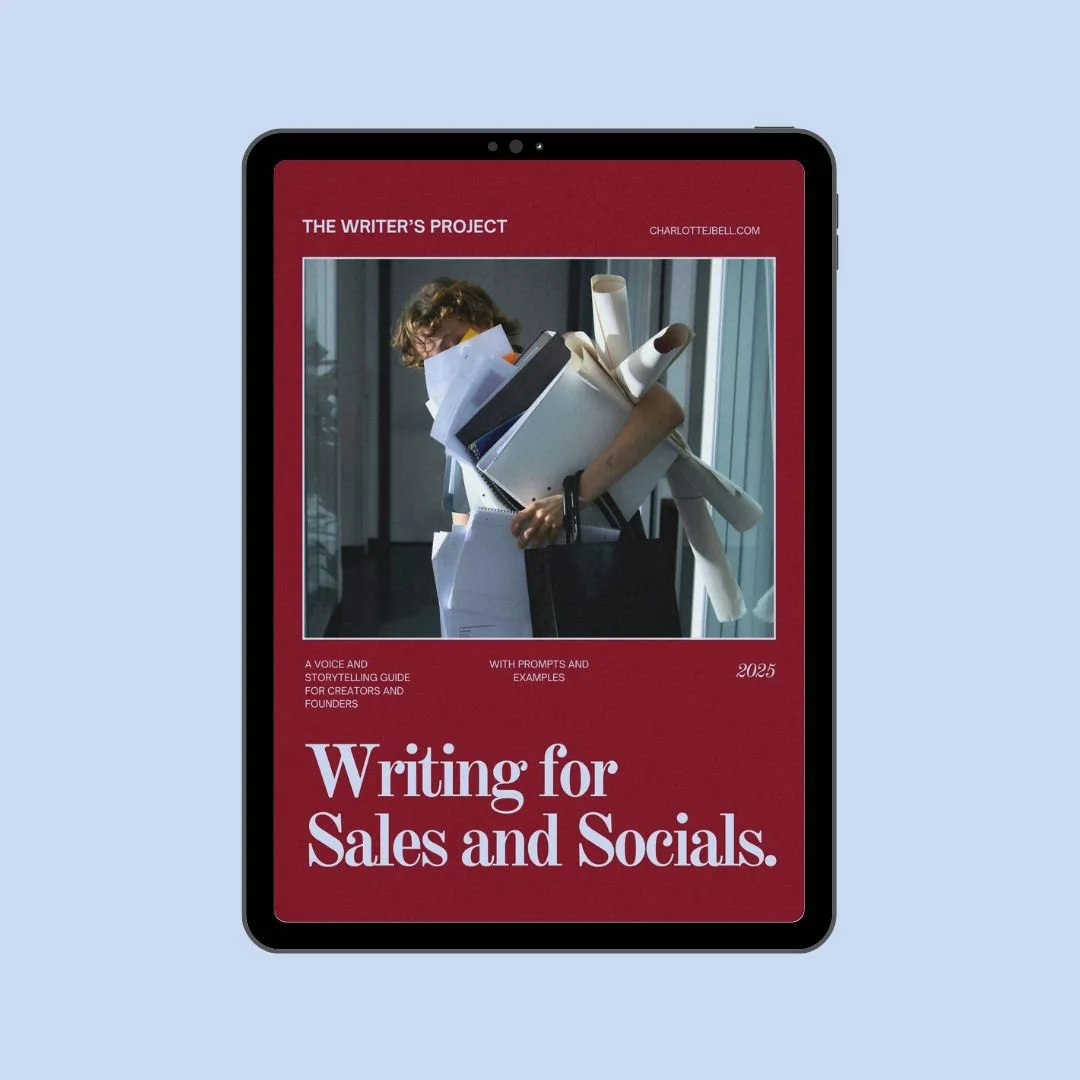
A 31-page PDF guide that moves from why your writing currently feels off, through finding your real voice, into the practical work of writing for specific channels.
Topics covered:
Why writing for your business feels harder than other writing
How to find your real voice instead of forcing a brand voice
The difference between sounding professional and sounding like yourself
Writing for your actual reader, not a generic audience
Website copy that doesn't sound like a template
Social captions that earn attention without performing
Email and newsletter copy people actually open
Editing your own work without losing your voice
Using ChatGPT as an assistant without sounding like ChatGPT
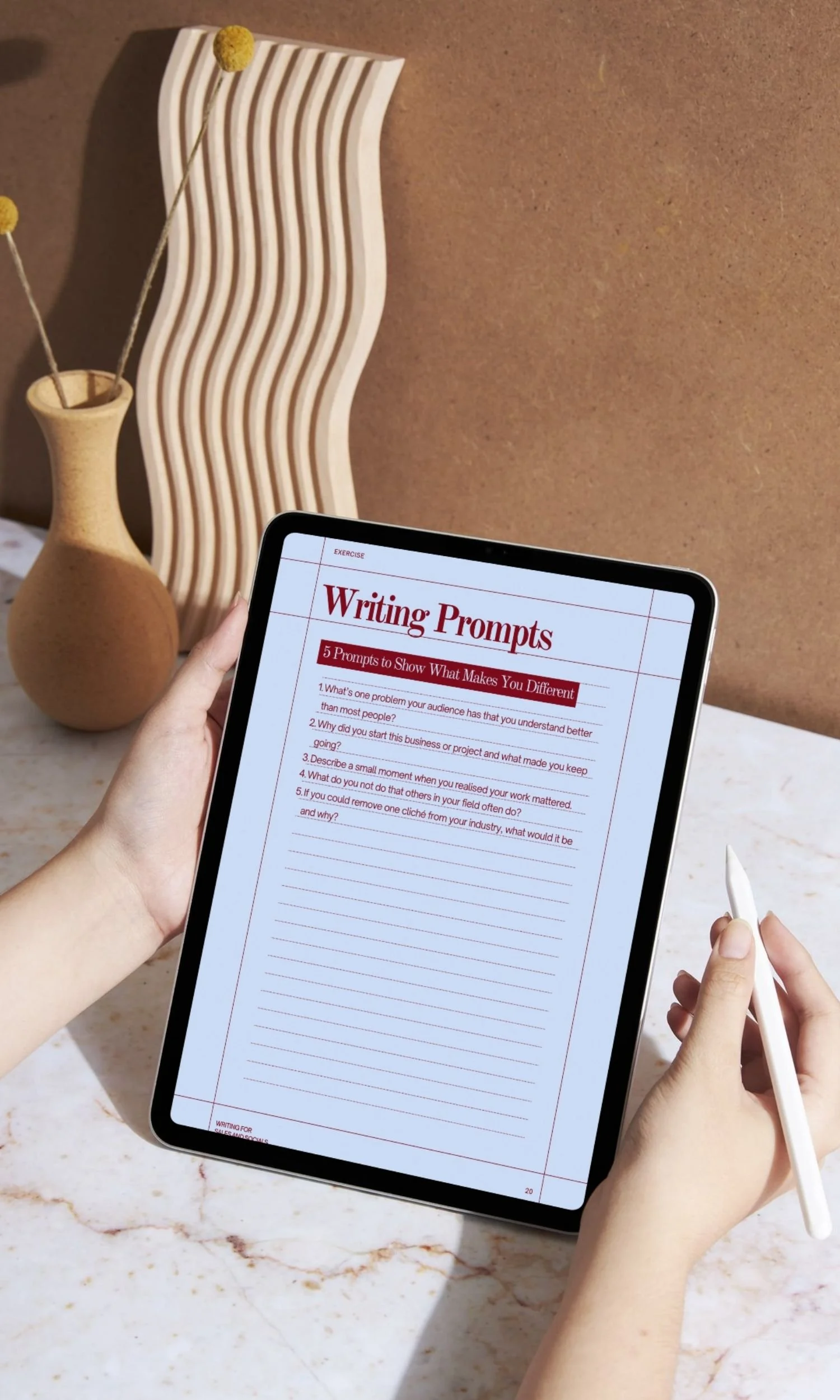
Each section includes worked examples, real-world prompts, and exercises you can apply to whatever you're working on. You can read it cover to cover or jump straight to the section you need.
Who it’s for
This guide is for anyone who's ever sat down to write something for their business and thought why does this sound fake? Or who's procrastinated for two weeks because everything they write sounds wrong.
It works particularly well if you:
Run a small business and write your own marketing copy
Are a maker, artist, or creator selling your own work
Are launching a product, a service, a Substack, an Etsy store, or a side project
Are responsible for content at a small organisation without a marketing team
Hate sounding like you're trying to sell something
Don't love writing but want to connect with your audience
Use ChatGPT for first drafts and want to edit them so they sound like a person
Are sick of marketing advice that treats your audience like a conversion metric
It works less well if you're looking for advanced SEO strategy, paid ads copywriting, or technical funnel building. This is foundational copy i.e. words that work on a real human reader, regardless of channel.
How to Use It
Work through it at your own pace. Read it cover to cover the first time, then come back to specific sections when you need them.
As a one-pass read. A weekend afternoon and a notebook. Read it once before you try to apply anything.
As a reference. Once you've read it, come back to specific sections as needed. The chapter on product descriptions when you're listing a new product. The chapter on website copy when you're rewriting your home page. The chapter on AI when you're editing a ChatGPT draft.
As a writing companion. Open the relevant chapter beside whatever you're trying to write. Use the prompts to get unstuck on a specific page or post.
As a brief for your team. If you have a small team writing copy across different channels, reading the guide together gives you a shared language for what good looks like.

About the Author
I'm Charlotte J. Bell, a writer based in Ōtautahi, Christchurch. I hold a Master of Writing with Distinction from the University of Canterbury and a Bachelor of Science in Microbiology and Geography.
I'm Content Lead at a New Zealand fashion brand and previously SEO Copywriting Lead at a global digital agency, where I oversaw content quality, search performance, and editorial standards across multiple client accounts. I've worked with small businesses, agencies, brands, and publications as a writer for over a decade.
I wrote Writing for Sales and Socials from the position of someone who's done the work for hundreds of clients and for myself, and who knows what works when the budget for a copywriter isn't there. The guide is a starting point and a reference. If you want more support, I take on a small number of brand and copywriting commissions each year through my Work With Me page.
Frequently Asked Questions
-
A PDF that works on any device — phone, tablet, desktop — and is also formatted for printing. Designed to be read and used, with worked examples and prompts throughout.
-
It's written for people who've already written something for their business and aren't happy with how it sounds. If you've never written anything for your business at all, the guide will still help you, but you'll get more out of it if you have a draft in front of you to apply the ideas to.
-
Both. The underlying principles, finding your real voice, writing for your actual reader, avoiding template phrasing, apply across every channel. Different channels need different applications, and the guide covers them.
-
Yes. There's a section on using AI as an assistant without sounding like everyone else who uses AI as an assistant. The guide explicitly teaches you the patterns that make AI copy read as AI copy, so you can edit them out of your own drafts.
-
The download link is sent to the email address you enter at checkout, immediately. If you don't see the email, check your spam folder, then email me and I'll send it manually.
-
No. SEO is about getting people to your site. This guide is about what they read when they're there. SEO copy that doesn't connect with readers fails on both fronts.
More from me
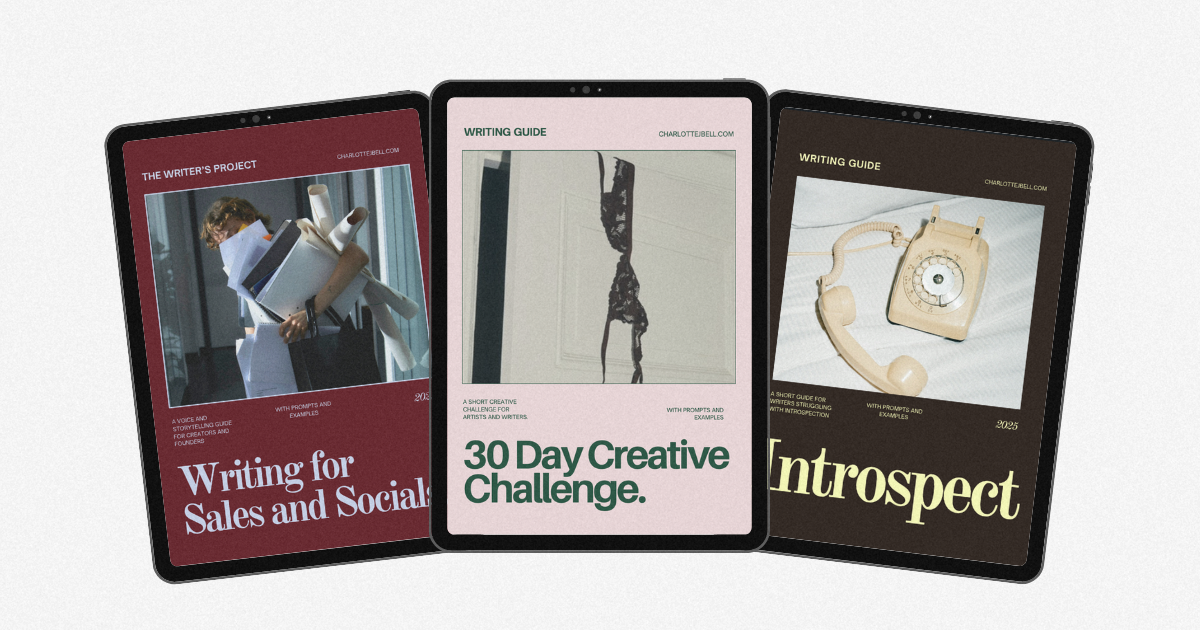
If you also want a daily writing practice to build the habit, the free 30-Day Writing Challenge gives you a prompt a day for a month.
If you're more drawn to introspective and reflective writing than to writing-for-business, Introspect is the next guide in the series.
For regular reading from me while you write, my Substack Trainwrecks publishes new essays regularly. Subscribing is free.